In this article
You have traffic. People follow you, open your emails, even DM you about your content. But when it comes time to buy? Silence.
That gap between “knows about you” and “pays you” has a name. It is called a funnel. And most solo creators do not actually have one. They have a loose collection of tools, posts, and good intentions that do not connect into anything deliberate.
What Is a Funnel in Marketing?
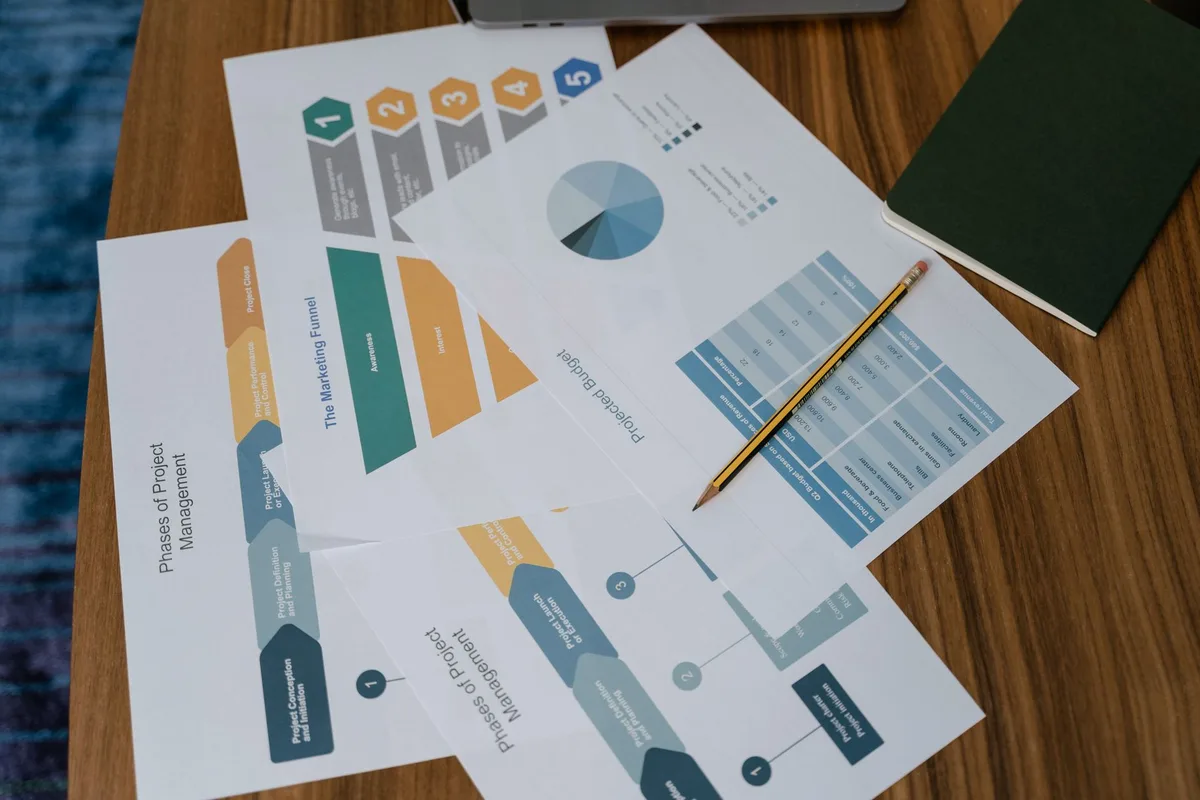
A marketing funnel is the sequence of steps a stranger takes to become a paying customer. It maps the journey from first contact to completed sale, covering every stage a person moves through before, during, and after a purchase. The funnel shape reflects the narrowing: many people enter at the top, fewer convert at the bottom.
The word “funnel” describes the geometry. At the top, you have a wide group of people who become aware of you. As they move through each stage, the number narrows. Not everyone who discovers you will consider buying. Not everyone who considers buying will purchase.
That narrowing is the funnel.
The concept exists because buying decisions are rarely instant. Someone discovers your work, evaluates whether it fits their situation, weighs the cost against the value, and then decides. Every one of those moments is a stage you can influence, improve, or completely ignore.
Most solo creators ignore most of them.
What Are the Stages of a Marketing Funnel?
Marketing funnels are typically divided into three layers: top of funnel (awareness), middle of funnel (consideration), and bottom of funnel (conversion). For solo creators, these translate to discovery, trust-building, and purchase. Some models add a fourth stage for retention, where post-purchase follow-up turns one-time buyers into repeat customers.
Here is what each stage means in practice:
Top of funnel: Discovery. How people find you. Organic search, social media, a podcast appearance, a referral. You are not selling here. You are making people aware that you exist and cover something they care about.
Middle of funnel: Consideration. Where people decide whether they trust you enough to go further. They read your articles, subscribe to your list, download a lead magnet. The goal is to demonstrate that you understand their problem more precisely than anyone else.
Bottom of funnel: Conversion. The purchase decision. The visitor has seen enough and believes your offer solves their problem. The goal here is to remove friction from a decision the person has largely already made.
Retention (worth adding early). What happens after the first purchase. A buyer who had a good experience is far easier to sell to again than a cold visitor.
Understanding which stage someone is in tells you which message to send them.
Why Do Creator Funnels Look Different From Business Funnels?
Solo creator funnels differ from enterprise funnels in three key ways: they rely on personal trust rather than brand recognition, they must be maintained by one person rather than a team, and they typically operate with smaller traffic volumes where each conversion decision matters more. Most funnel frameworks found online were built for companies with marketing departments.
The funnel advice you find on most marketing blogs assumes a CRM with lead scoring, a sales team that handles qualified leads, and separate people managing ads, email, and content. None of that applies when you are one person running your entire operation.
The direct relationship between a creator and their audience generates more trust than a faceless brand can build with months of advertising. A creator with 1,000 engaged email subscribers can convert at rates that would look unusual for a typical corporate marketing funnel.
The tradeoff is time. Every part of the funnel requires your attention. You cannot hand off email sequences or outsource landing page optimization. This means the funnel needs to be simple enough for one person to build, maintain, and improve. That constraint is not a limitation. It forces clarity.
The enterprise funnel has 12 stages, a scoring model, and a sales team. The creator funnel has four honest steps and needs to run while you are creating content or doing something else.
Where Do Most Solo Creator Funnels Break?
The four most common failure points in solo creator funnels are: sending traffic to a homepage instead of a focused landing page, offering a lead magnet that attracts the wrong audience, running an email sequence too short to build purchase intent, and introducing friction at checkout that loses buyers who have already decided. Most funnels have one primary leak, not all four simultaneously.
If your funnel is not converting, these are the four places to look first:
Landing page conversion rate. If your opt-in page converts below 15-20% of cold traffic, the problem is usually the headline or the offer clarity. Visitors need to understand in roughly five seconds exactly what they get and why it matters to them specifically. If the page requires careful reading to understand the value, it needs a rewrite.
The lead magnet match. A lead magnet that attracts the wrong audience creates an email list full of people who will never buy your offer. The lead magnet should connect directly to what you sell. If you sell a course on Instagram growth, a general social media checklist attracts a broader audience than an “Instagram Audit Template” aimed at course-ready creators. The more specific the lead magnet, the better the list quality.
The email sequence length. Most solo creators have welcome sequences that are too short to build real purchase intent. Two or three emails that say hello, deliver the lead magnet, and then go quiet do not move a subscriber from interested to ready-to-buy. The sequence needs enough room to establish expertise, address objections, and introduce the offer with enough context for someone to make an actual decision.
Checkout friction. You can lose buyers at the last step through a confusing checkout page, too many required fields, unexpected pricing, or no visible guarantee. By the time someone reaches your checkout, they have largely already decided to buy. The checkout page’s only job is to not talk them out of it.
Not sure which stage is leaking in your funnel? Map each stage before trying to fix anything. The Solo Funnel Blueprint walks you through the diagnostic in about 20 minutes and tells you which single step to address first.
What Does a Simple Solo Creator Funnel Actually Look Like?
The minimum viable solo creator funnel has five components: a traffic source, an opt-in page, a lead magnet, a welcome email sequence, and a paid offer. You do not need a dedicated funnel builder to assemble this. A basic page builder, an email platform like ConvertKit or Brevo, and your existing checkout tool are enough for most creators starting out.
Here is a concrete example:
A course creator publishes search-optimized content about public speaking. Someone finds an article through Google and reads it. At the end of the article, there is an opt-in offer: a downloadable presentation framework PDF. The reader enters their email and receives the PDF along with a five-email welcome sequence. The final email introduces a $197 course on presentation fundamentals. A portion of those who downloaded the PDF buy the course within 30 days.
That is the whole funnel. No ClickFunnels required. No complex automation. Just: content brings the right people, a lead magnet captures their email, an email sequence builds trust, and a course offer converts the ones who are ready.
The key is that every step connects to the next one deliberately. The content attracts a specific audience. The lead magnet is relevant to what that audience wants next. The emails deliver value before making an ask. The offer is a natural progression for someone who already found the free content useful.
If any connection is missing or weak, the funnel leaks at that point.
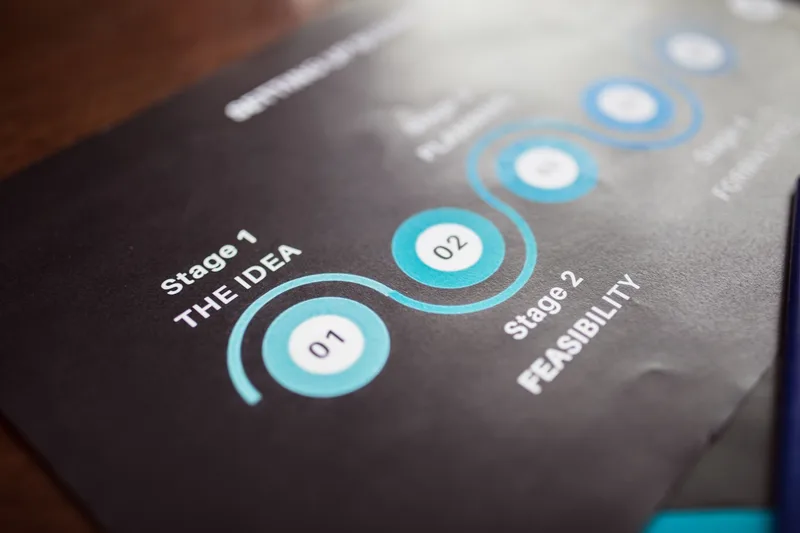
Some creators extend this base structure with a more involved middle step. A webinar funnel adds a live or automated presentation between the email sequence and the offer. A VSL funnel replaces the webinar with a video sales letter on a dedicated page. Both are variations on the same core architecture: get attention, build trust, make an offer.
You do not need to build anything advanced before you understand whether the basic structure works for your audience.
How Do You Know If Your Funnel Is Working?
A functioning marketing funnel shows measurable conversion at each stage. Broadly, solo creators should track: landing page opt-in rate (target 15-30% for cold traffic), email open rate (25% or above indicates healthy engagement), and offer conversion rate (0.5-3% of list to buyer per campaign is a typical range). These are reference points, not guarantees. What matters is whether each number improves over time.
The metrics to watch at each stage:
Discovery (top of funnel). Monthly organic traffic and newsletter signups from non-email sources. If you have fewer than 500-1,000 monthly visitors, the funnel’s conversion rate is almost irrelevant. The constraint is awareness, not optimization.
Opt-in rate. How many landing page visitors become email subscribers? Below 10% on cold traffic means the page or the offer needs work. This is the most important number to improve early because every downstream stage depends on it.
Email engagement. Open rate and click-through rate tell you whether emails are building enough trust to drive action. Open rates below 20% often signal a deliverability issue or a mismatch between what subscribers expected and what they are getting.
Offer conversion rate. Out of everyone who receives your paid offer, how many purchase? If this number is near zero, work backwards: are people opening the email, clicking to the sales page, adding to cart? Each answer points to a different problem.
The funnel does not need to be perfect. It needs to be readable enough that you know which number to look at when results are not what you expected.
For context on the tools that power some of these stages, understanding what ClickFunnels is and when solo creators actually need it gives you a useful lens on funnel architecture, even if you ultimately choose simpler tools.

What Do You Actually Need to Build Your First Funnel?
A first solo creator funnel requires four things: a page that captures email addresses, an email platform that sends automated sequences, a lead magnet worth trading an email for, and a paid offer connected logically to that lead magnet. Most solo creators already have three of these. The missing piece is usually the deliberate connection between them.
Start with what you have. If you have an email platform (ConvertKit, Brevo, or MailerLite all work), any page builder, one piece of genuinely useful free content, and one paid offer, you have everything you need. The work is connecting these pieces deliberately rather than hoping visitors figure out the path on their own.
Define the offer first. What do you sell, and who is it for? The lead magnet, the opt-in page, and the email sequence all work backward from that answer. Without a clear offer, no amount of funnel optimization will produce reliable results.
The lead magnet should solve one specific problem your ideal buyer has before they are ready to purchase. The closer it maps to the paid offer, the better the list quality. The email sequence needs three to five emails minimum: one to deliver the lead magnet, two or three to build credibility and address objections, and one to make the offer directly.
That is a funnel. Simple, maintainable by one person, and fixable when the data tells you something is not working. According to Mailchimp’s email marketing benchmarks, average email open rates across industries run 20-40%, which gives you a realistic target range for the middle of your funnel.

Frequently Asked Questions
What is the difference between a marketing funnel and a sales funnel?
The terms are often used interchangeably but refer to slightly different scopes. A marketing funnel covers the full journey from awareness through purchase, including brand discovery and the consideration phase. A sales funnel typically refers to the later stages only, from expressed purchase intent through closed sale. For solo creators managing the entire process themselves, the distinction rarely matters in practice.
Do I need a dedicated funnel builder tool to create a marketing funnel?
No. A basic creator funnel requires three tools: a page builder to capture email addresses, an email platform to send automated sequences, and a checkout tool for your offer. Carrd, ConvertKit, and Gumroad cover all three for under $50 per month combined. Dedicated funnel builders like ClickFunnels add convenience for complex multi-step setups but are not necessary for a simple five-step funnel starting out.
How long does it take for a marketing funnel to start working?
Results depend on traffic volume, not time. A funnel receiving 100 visitors per month will take far longer to generate meaningful data than one receiving 5,000 visitors per month. For most solo creators starting from scratch, expect 90 to 180 days before you have enough data to know clearly what is working and what needs adjustment. The funnel itself can be built in a weekend. Getting enough traffic through it to diagnose accurately takes longer.
What is a good conversion rate for a marketing funnel?
Conversion rates vary significantly by funnel type and traffic source. Opt-in pages receiving cold traffic typically convert between 10% and 30% for a well-targeted lead magnet offer, per industry benchmarks from sources like Unbounce’s Conversion Benchmark Report. Email-to-purchase conversion for a warm list typically runs 0.5% to 3% per campaign, depending on offer price and how well the sequence built purchase intent. These are reference ranges, not targets.
Can a marketing funnel work without paid advertising?
Yes. Most solo creator funnels are built on organic traffic: search, social media, podcast appearances, and referrals. Paid advertising accelerates the top of the funnel by bringing in more visitors faster, but it does not repair a broken funnel. If your conversion rates are low, running ads into the same funnel accelerates the loss. Fix the funnel structure first, validate that each stage is converting, and then consider adding paid traffic as a multiplier.
Keep Reading
What to Do Next
Choose the path that fits where you are right now.
Get the Free Solo Funnel Diagnostic
Get the free Solo Funnel Diagnostic. 12 diagnostic questions. Scored in 10 minutes. Tells you exactly which stage is broken and what to fix first.
Send Me the Diagnostic